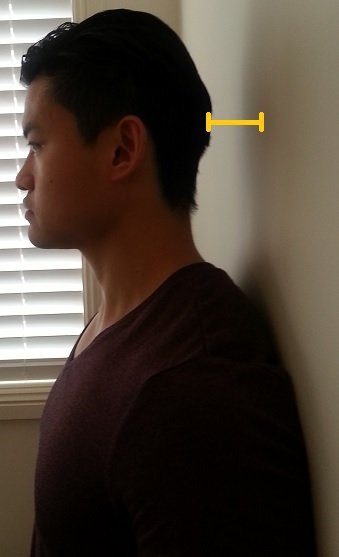
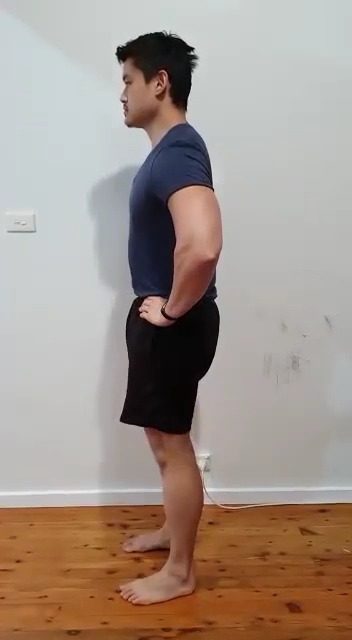
What's actually happening
Your symptoms aren't three separate problems — they're one linked pattern. Named clinically, it's Upper Crossed Syndrome stacked on Lower Crossed Syndrome: a head-to-pelvis pattern where some muscles tend to sit chronically tight while their opposites go weak, crossing over in an X. It's a useful map, not a proven cause of pain — plenty of people have this posture and feel fine — so the aim is to move and feel better and build capacity, not to "fix a defect."
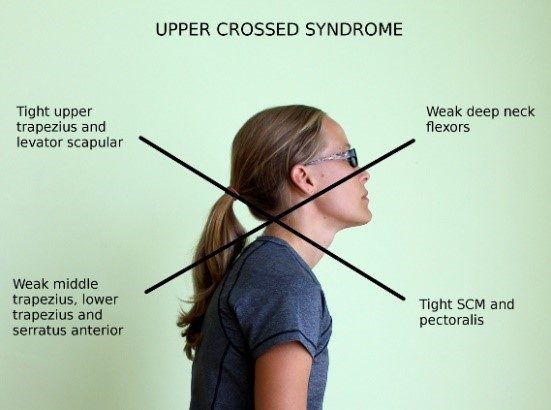
Upper cross — neck & shoulders
Tight → release
- Upper trapezius
- Levator scapulae
- Pectoralis major & minor
- Sternocleidomastoid
- Suboccipitals
Weak → strengthen
- Deep neck flexors
- Lower & mid trapezius
- Rhomboids
- Serratus anterior
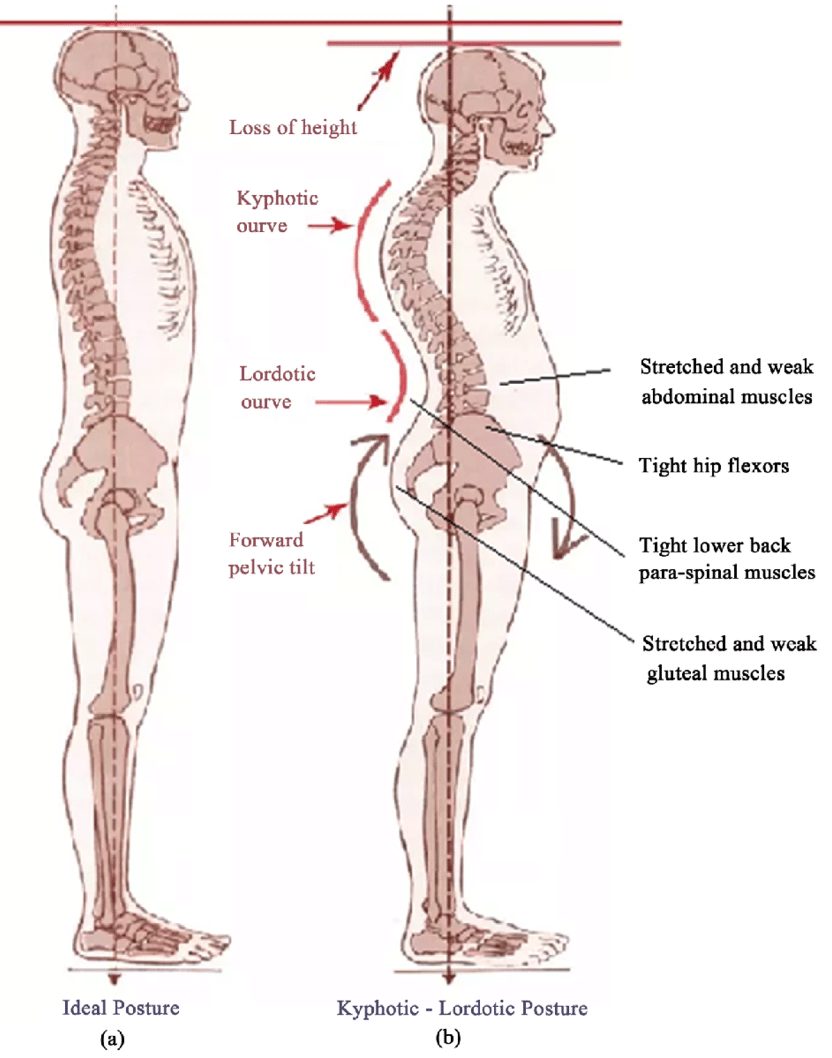
Lower cross — hips & belly
Tight → release
- Hip flexors (iliopsoas)
- Rectus femoris
- Tensor fasciae latae
- Lumbar erectors
- Quadratus lumborum
Weak → strengthen
- Gluteus maximus
- Gluteus medius
- Deep abdominals
- Obliques
Anterior pelvic tilt, or sway back?
Stand relaxed, side-on to a mirror. Belly AND buttocks both stick out, low back arched, belt tips down at the front → anterior pelvic tilt (this protocol fits). Hips pushed forward ahead of the chest, buttocks flat/tucked, upper back leaning back → sway back, which needs a different emphasis — get a hands-on assessment before following the lower-body strengthening here.
When to stop and get checked
- Sharp pain, or pain that lingers after you finish.
- Numbness, pins-and-needles, or weakness down an arm or leg.
- Dizziness, light-headedness or visual changes during any neck move — stop at once.
- Anything that makes your symptoms steadily worse.
Get cleared first before the neck ball-work and end-range neck/back moves if you have rheumatoid arthritis, known upper-neck instability, vertebral-artery issues, or osteoporosis. This is educational, assembled from your references — not a substitute for a personal physiotherapy assessment, which is the only way to confirm your pattern.